
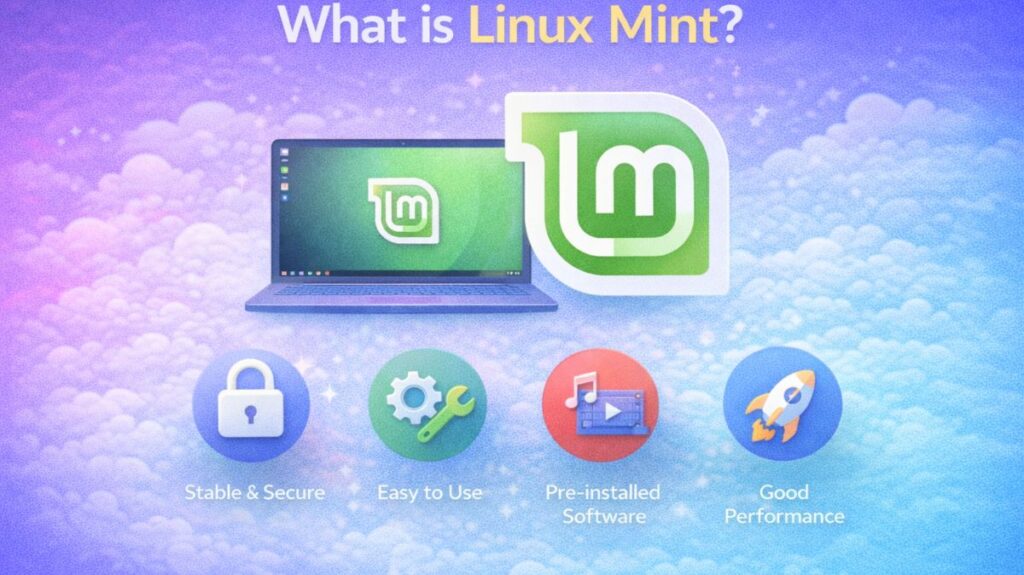
What Is Linux Mint?
Linux Mint is a free and open-source operating system based on Linux, aiming to be simple, fast, and user-friendly. It is built on top of Ubuntu or Debian and delivers a complete desktop experience out of the box. Because of its user-friendly design, Linux Mint is particularly well-liked by novices switching from Windows.
Unlike many other Linux distributions that emphasize on minimalism, Linux Mint focuses on usability. It includes important software such as a web browser, media player, office suite, and system utilities, so users may start working immediately after installation without unnecessary setup.
History of Linux Mint
Cléo Lefèbvre originally published Linux Mint in 2006. The goal was to build a Linux distribution that was more practical and comfortable than Ubuntu, which at that time was changing its interface often.
Linux Mint has become into one of the most popular desktop Linux distributions worldwide over time. Because it stayed away from drastic design changes and consistently prioritized reliability, long-term support, and a consistent user experience, it gained popularity.
Three key concepts form the foundation of Linux Mint:
- Usability: Without technological expertise, anyone should be able to utilize it.
- Stability: Updates are extensively tested before release.
- Out-of-the-box experience: Most drivers and codecs are pre-installed.
This concept makes Linux Mint appropriate for everyday users, students, and professional contexts.
Also read about Explain File Permissions In Linux & Ownership With Examples
Editions of Linux Mint
Linux Mint is available in three main desktop editions:
Cinnamon Edition
This is the flagship version. Cinnamon is a modern desktop that looks similar to Windows. It is powerful, customizable, and visually appealing.
MATE Edition
MATE is a lightweight and traditional desktop environment. It runs well on older computers and consumes fewer system resources.
Xfce Edition
Xfce is the lightest version. It is extremely fast and suitable for low-end hardware or virtual machines.
| Edition | Best For… | Description |
| Cinnamon | Most Users | The flagship. Modern, sleek, and highly customizable with a Windows-like “Start” menu. |
| MATE | Classic Feel | A continuation of the traditional GNOME 2 interface. Stable and fast. |
| Xfce | Old Hardware | Extremely lightweight and snappy. Ideal for computers with limited RAM. |
System Architecture
Linux Mint is based on two major foundations:
Ubuntu-based Mint
Most Linux Mint releases are built on Ubuntu LTS (Long Term Support). This ensures five years of security updates and access to a massive software repository.
Debian-based Mint (LMDE)
Linux Mint Debian Edition (LMDE) is based directly on Debian. It exists as a backup in case Ubuntu ever becomes unsuitable.
Desktop Environment and Interface
Linux Mint provides a clean and simple interface:
- Start menu at bottom-left
- Taskbar with open applications
- System tray for notifications
- Desktop icons
Everything is designed to feel natural for users coming from Windows.
Software Management
Linux Mint uses powerful package management tools:
- APT for installing software
- Software Manager with a graphical interface
- Update Manager for system updates
You can install thousands of applications using just one click.
Also read about What Is Debian Package In Linux? Advantages & Disadvantages
Linux Mint system requirements
One of Mint’s greatest qualities is its efficiency. It can run on hardware that Windows 11 would label “obsolete.”
- Minimum RAM: 2GB (4GB suggested for smooth multitasking).
- Disk Space: 20GB (100GB recommended).
- Processor: Any 64-bit CPU (most computers produced after 2007).
- Display: 1024×768 resolution.
Why Choose Mint over Ubuntu?
While Mint is based on Ubuntu, it makes some important departures that consumers love:
- No “Snaps” by Default: Mint prefers Flatpaks and classic .deb packages, which often launch faster and integrate better with system themes.
- Traditional UI: Ubuntu employs the GNOME desktop, which can feel strange to Windows users. Mint’s Cinnamon instantly makes you feel at home.
- The “Mint Tools”: From the Software Manager to the Backup Tool, Mint’s homegrown tools are often deemed more user-friendly than the stock Ubuntu equivalents.
Do you think it’s appropriate?
Linux Mint is the solution if you’re looking for an operating system that respects your privacy, stays out of the way, and works quickly on practically any hardware. It is the excellent “transition” OS for anyone tired of the bloatware and tracking present in modern commercial operating systems.
Standout Features in 2026
In 2026, Mint has attained unprecedented heights of polish, notably with the release of Cinnamon 6.6.
The Update Manager: Frequently regarded as the best in the Linux community, it allows you to “Timeshift” (snapshot) your system prior to any significant changes by clearly classifying updates by security risk and stability.
Warpinator: An integrated program that makes it as simple as AirDrop to transfer files to other Linux or Android devices over your local network.
XApps: A collection of programs with a unified appearance and feel that can be used in any desktop environment, such as the Pix image viewer or the Xed text editor.
Advanced Gaming Support: With the maturing of Valve’s Proton, Mint is now a great gaming platform. Installing NVIDIA or AMD drivers only requires one click thanks to the “Driver Manager.”
Also read about What Is RPM based Linux Systems? Features, Benefits & Uses